Member Update on Recent Activity
October 31st 2025
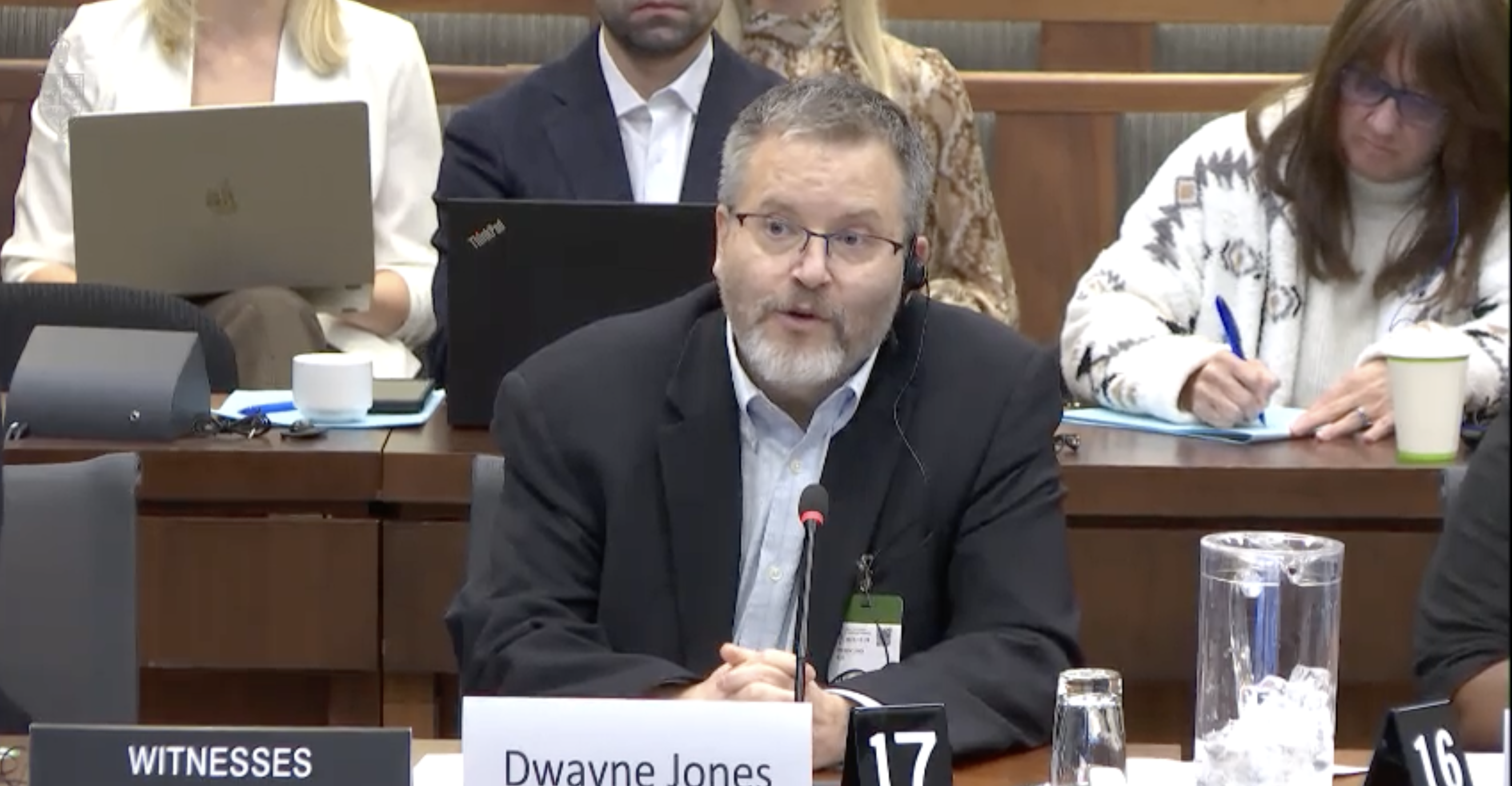
On Tuesday, October 28, the Canadian Postmasters and Assistants Association (CPAA) appeared before the House of Commons Standing Committee on Government Operations and Estimates (OGGO). CPAA National President Dwayne Jones, joined by CPAA legal counsel Alison McEwen, testified as part of the Committee’s review of the Government’s handling of “the Situation at Canada Post.”
In his remarks, Dwayne highlighted the essential role rural post offices play in connecting Canadians and sustaining community life, emphasizing that for many residents in remote and Northern communities, the post office is not just a workplace but a lifeline. He cautioned that Canada Post’s current transformation process risks excluding the communities it most affects—without public costing, impact analysis, or meaningful consultation.
As Dwayne told the Committee:
“In a time when much of Canada feels disconnected, and communities are isolated by disasters or limited broadband, the post office remains one of the few threads physically binding this country. The Canadian flag above the post office is more than symbolism. Beyond symbolism, Canada Post has a legal obligation under the Canada Post Corporation Act and its Universal Service mandate to provide postal services to all Canadians, including those in rural, remote, and Northern communities. This duty cannot be compromised in the name of cost-cutting.”
Dwayne reiterated CPAA’s three key calls to action for the federal government:
● Transparency and consultation before any postal changes or closures occur, ensuring no community lifeline is cut off.
● An extended consultation period, from 45 to at least 100 days, while maintaining the existing moratorium on closures throughout that time.
● A guaranteed minimum access distance standard, tailored to each region, to protect rural jobs and ensure fair access to postal services.
He also underscored that rural delivery remains one of the most cost-efficient parts of Canada Post’s operations and that cuts to rural service would deepen inequities and erode public trust.
Members of Parliament engaged actively during the session, asking about the definition of “rural,” how the minimum access distance standard could work in practice, and what the impact of closures would be on seniors, low-income residents, Indigenous communities, and small businesses. Dwayne emphasized that each post office and community is unique, and that there is no one-size-fits-all solution—each potential closure must be carefully assessed through a transparent consultation process.
Following the hearing, CPAA continued discussions with several MPs and senior political staff, receiving assurances that the Association will continue to be consulted as the Government reviews Canada Post’s forthcoming recommendations and determines a path forward.
You can watch Tuesday’s hearing here. The meeting ran approximately two hours, and CPAA appeared on the second panel during the latter half of the session, beginning at 12:03.
CPAA will continue to advocate for full transparency and meaningful engagement to ensure that any modernization plan strengthens—not weakens—postal service in rural, remote, and Northern communities.
We appreciate your ongoing support, and we will continue to keep members updated as this process moves forward. Thank you, as always, for your continued dedication and service to Canadians.
 CPAA MANITOBA
Leave a comment